
5 2026 Interior Design Trends That Are Worth Trying

The interior design trends shaping 2026: warm earthy palettes, texture layering, biophilic design, personal collections, and wellness-focused spaces.

The trends shaping interiors right now aren't loud. They aren't built to grab attention from a feed. They're quieter, slower, and rooted in something the design world has been moving toward for years: homes that feel like the people who live in them.
After a decade of sleek minimalism, stark whites, and matchy showroom-perfect rooms, we're collectively asking for something warmer. Something layered. Something that tells a story.
Here are five 2026 design trends I'm seeing on every mood board crossing my desk that are absolutely worth trying.
Warm Earthy Palettes

Cream. Butter. Terracotta. Putty. Rust. The palette of 2026 looks like sunlight on stone.
For years, cool grays and crisp whites dominated. They were safe. They photographed well. But they often left rooms feeling like nobody actually lived there. What's changing now is a return to the colors that show up naturally in our environment: the warm undertones of clay, wood, sand, and golden hour light.
This shift isn't a rejection of neutrals; it's a recalibration of which neutrals feel right. A warm white reads softer. A taupe with butter undertones is more forgiving. A clay accent wall feels enveloping rather than chilly.
If you're considering a refresh, start with one element (a paint color, a rug, a sofa cushion) and pull from the warm side of your palette. The room will feel different in a way that's hard to articulate but easy to feel.

Texture Layering
The most beautiful rooms aren't the most colorful. They aren't even the most decorated. They're the ones with the most varied texture.
Linen on a velvet sofa. Rattan against plaster walls. A wool rug under a glass coffee table. The eye reads contrast as warmth and depth, and texture is the easiest way to add both without buying anything new.
This is the trend that quietly elevates everything else. Pair a smooth leather chair with a chunky bouclé throw. Mix a polished stone counter with a hand-thrown ceramic vase. Set a glossy lacquered tray on a heavily-grained wood table.
If you've ever walked into a beautifully designed space and couldn't put your finger on why it felt so good texture layering is usually the answer.
Biophilic Design

We're built to feel calm around natural elements. Biophilic design (bringing the outdoors in) is one of the strongest, most sustained trends in interiors right now, and for good reason.
Real plants (not faux). Visible wood grain. Stone surfaces with their natural variation showing. Daylight prioritized over overhead lighting. Wool, linen, jute, leather, rattan.
These aren't aesthetic choices alone. They regulate something in us. There's actual research showing that spaces with natural materials lower stress and improve mood. Our homes increasingly need to do that work, and the trend is responding.
The simplest move: bring something living into every room. A trailing pothos. A small olive tree. A bowl of foraged greenery. It's the lowest-cost, highest-impact change you can make this season.
Personal Collections, Not Mass-Produced Décor
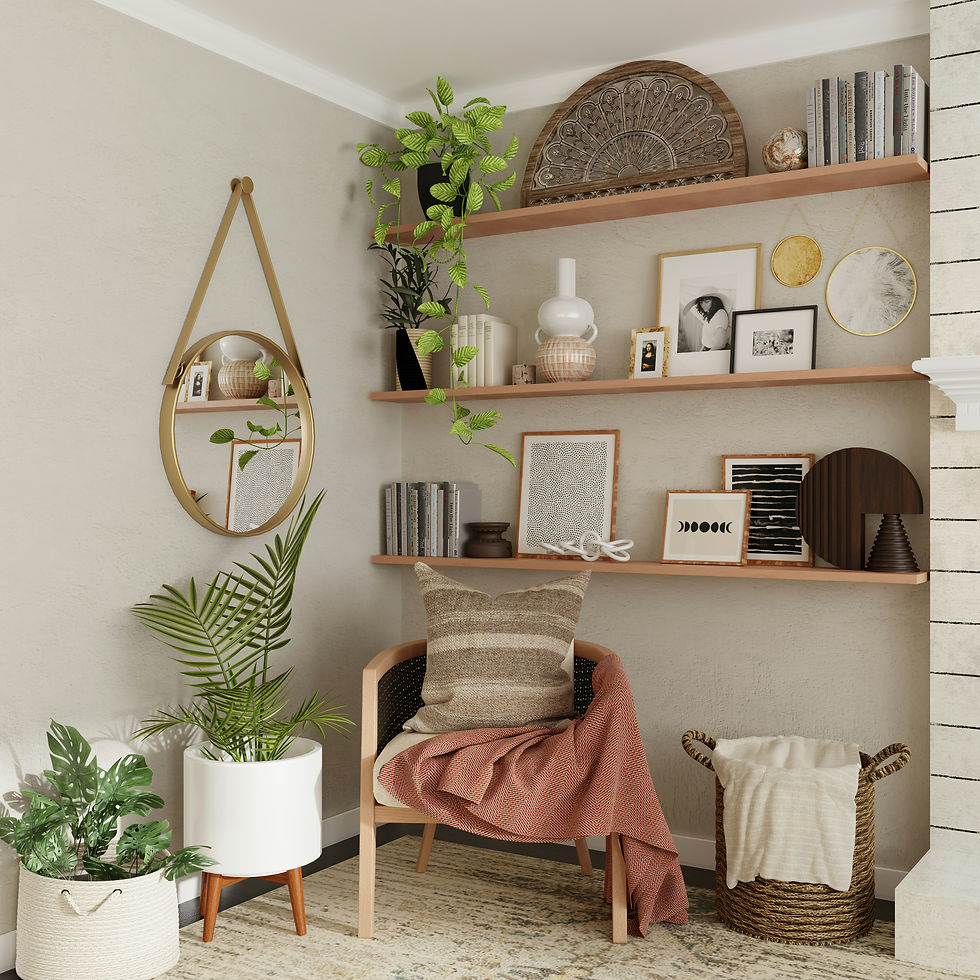
For years, a Target run could give you a "designed-looking" home in an afternoon. The trend now is the exact opposite: rooms that look like nobody could have copied them, because they're built around things that mean something specific to the people who live there.
Travel souvenirs. Inherited frames. Books you've actually read. A piece your mother painted. A rock from the trip you took ten years ago.
The most beautiful homes don't look like Pinterest. They look like a life. And they're impossible to replicate, which is exactly the point!
If your shelves feel "empty" but you don't want to add more stuff, look around your house first. The pieces that already mean something to you usually outperform anything you could buy.
Wellness-Focused Spaces
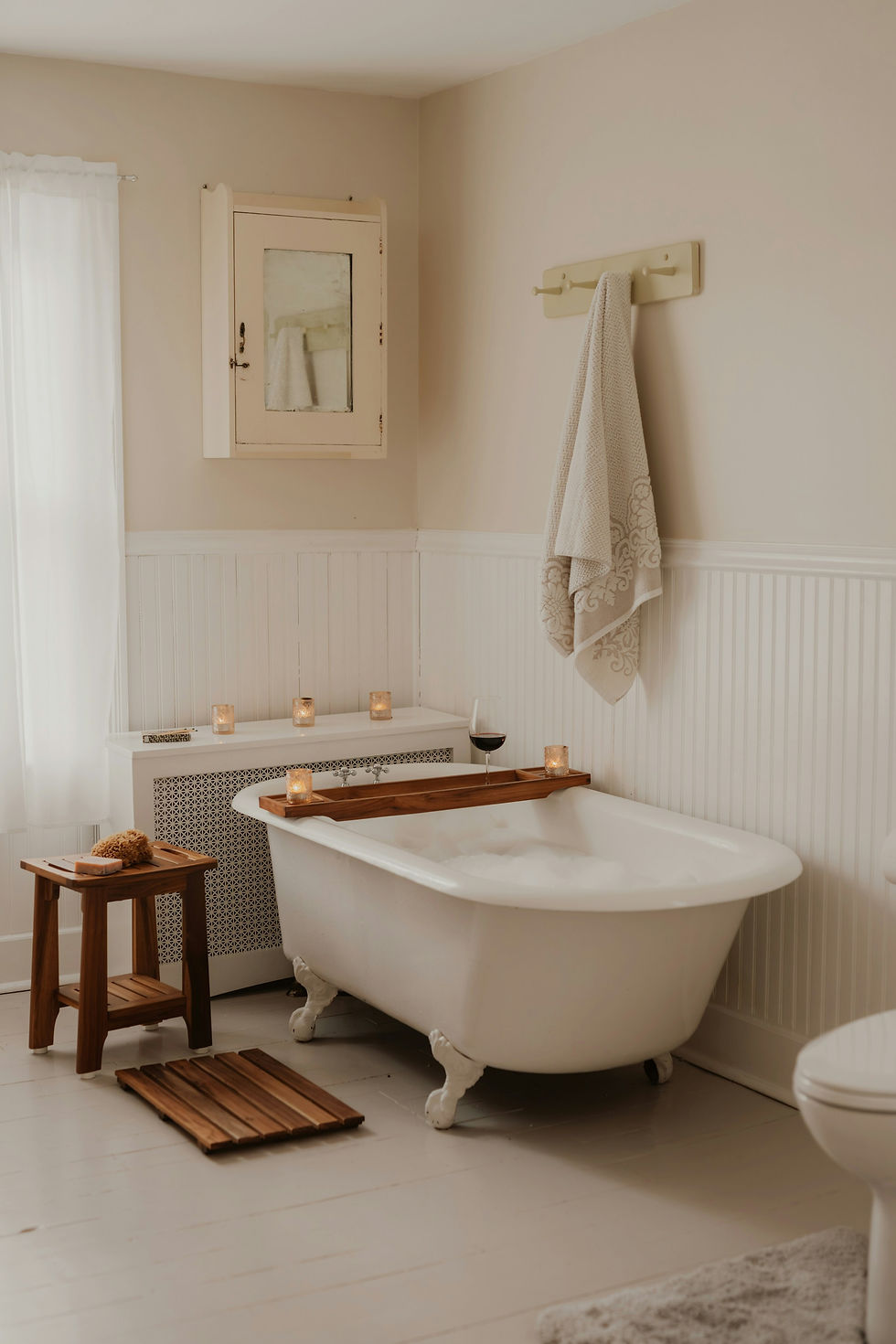
A reading nook by a sunny window. A meditation corner with a single beautiful object. A bathtub you actually want to soak in. A bedroom with no TV, no laptop, no work creeping in.
Design is following our culture's deeper turn toward slowing down. The functional, hyper-efficient spaces of the early 2020s are giving way to rooms that prioritize how a body feels in them, not just how the space performs.
This trend doesn't require renovation. It requires intention. What's one corner in your home that could become a moment of pause? A chair facing the window with a small side table. A bath tray with a candle. A bench with a basket of throws by the door.
Wellness in interior design isn't a feature, it's a posture. Rooms that say slow down tend to be the rooms people return to.
The Takeaway
The thread running through all five of these trends is the same: warmth, intention, personality. The things that have always made a house feel like a home are coming back to the foreground, and that's good news for everyone designing or living in their space right now!
Need help bringing any of these trends into your home? Let's talk →


Comments